
The Psychology Behind High-Converting Functional Medicine Website Design: What Every Integrative Practice Needs to Know

Your website has exactly 50 milliseconds to make a first impression. (That's less time than it takes to blink).
In that fraction of a second, potential patients/clients are making subconscious judgments about your integrative medicine practice/business… judgments that will determine whether they book a consultation or click away to your competitor.
As a functional medicine website designer with 25 years of experience building marketing strategies for Fortune 500 companies and high-growth healthcare startups, I've learned that great website design isn't about making things look pretty. It's about understanding the invisible psychological forces that drive human decision-making. The most powerful functional medicine website design elements work beneath the surface of conscious awareness, triggering emotional responses that either build trust or create friction.
For functional and integrative medicine practices, this psychological understanding becomes even more critical. You're not just selling a product. You're asking people to trust you with their health, to invest significant time and money, and often to challenge their existing beliefs about healing. Your functional medicine website needs to do far more than inform—it needs to inspire confidence at a visceral level.

The Neuroscience of Visual Processing
Why Your Website Design Matters More Than You Think
Our brains process visual information 60,000 times faster than text. When a potential client or patient lands on your integrative medicine website, their brain is making instantaneous calculations about credibility, safety, and value, mostly through visual cues.
This isn't just marketing theory. MIT research reveals that 90% of all information transmitted to the brain is visual. What does this mean for your website design? Every color choice, every image, every font, and every pixel of white space is communicating something to your visitors' subconscious minds.
Think about the last time you visited a restaurant with sticky floors and flickering lights. Even if the food was decent, something felt off. You probably didn't consciously catalog each flaw, but your brain was busy processing environmental cues that screamed "not safe, not clean, not professional." The same principle applies to your website.
Why Functional Medicine Websites Need a Different Strategy Than Healthcare Sites
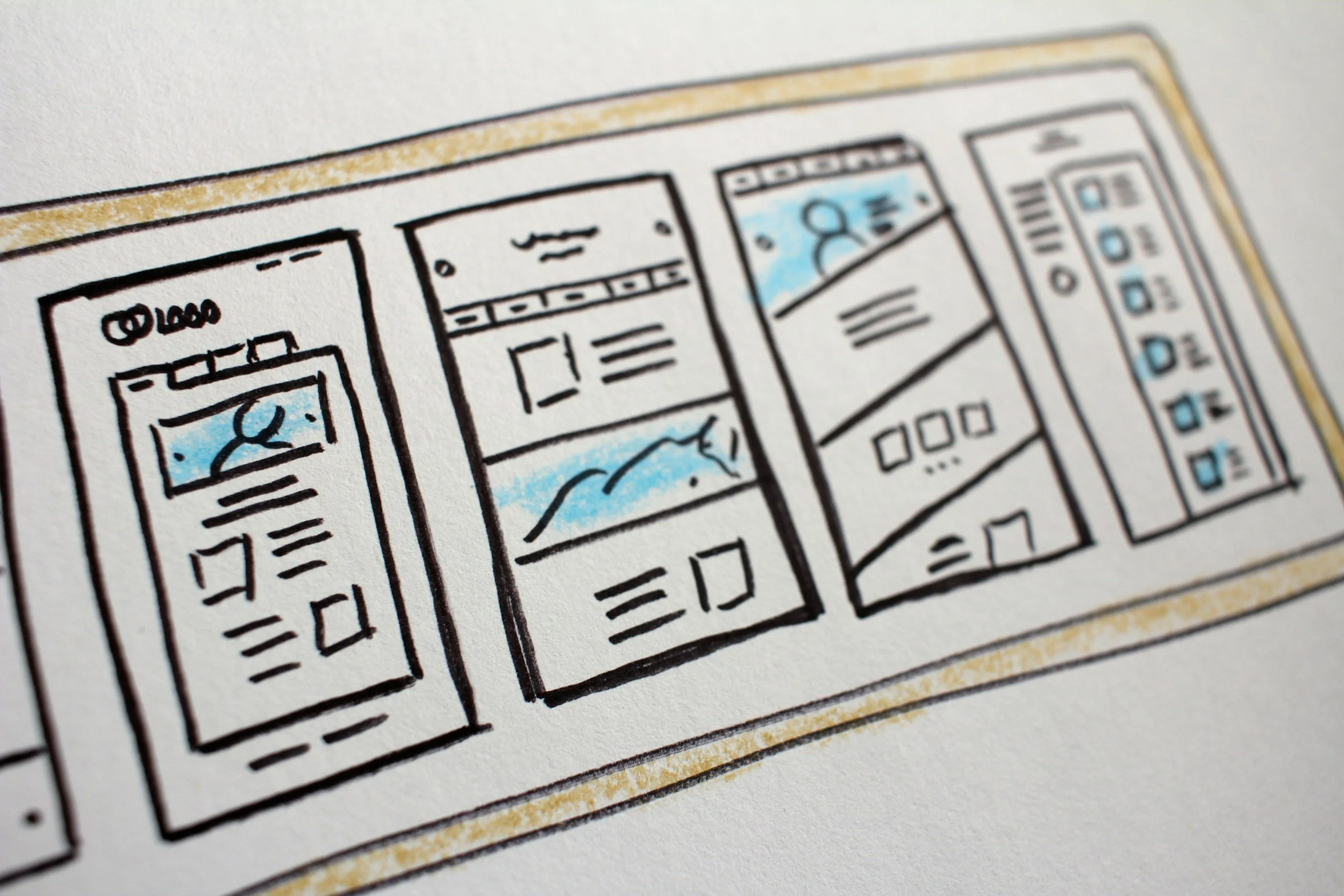
Your ideal patients are actively seeking alternatives to standard healthcare after years of frustration with the standard healthcare system.
Here's what most healthcare website designers miss: functional medicine website design requires a fundamentally different approach than traditional medical websites. Your ideal patients are actively seeking alternatives to standard healthcare after years of frustration with the standard healthcare system.
This means your website must walk a delicate psychological tightrope:
Project medical authority while conveying warmth and personalization
Balance scientific credibility with holistic, integrative thinking
Differentiate from conventional medicine without alienating medically-minded patients
Address patient skepticism while building trust in alternative approaches
The best functional medicine website design balances evidence-based medicine with integrative approaches, creating visual and messaging frameworks that resonate with health-conscious patients/clients seeking root-cause solutions.

Color Psychology
The Silent Language of Trust for your Website
Color isn't just aesthetic. It’s an emotional shorthand in website design. Research shows that 65% of all people are visual learners, and color plays a massive role in how they absorb and retain information about your business.
Strategic color choices for functional medicine websites:
Blue tones signal trustworthiness and calm, which is why major health institutions lean heavily on them.
Green shades evoke healing, growth, and nature, ideal for practices emphasizing holistic wellness and natural medicine.
Warm earth tones relay feelings of comfort and groundedness, great for functional health businesses focused on natural approaches
Avoid neon or overly bright palettes that can trigger anxiety in those dealing with chronic illness
Skip grays & too much red or black that read as cold and clinical to people seeking personalized, integrative care
The goal of strategic design is to create visual harmony that reduces cognitive load and allows your message to shine through. When color choices align with patient expectations and emotional needs, patient conversion rates naturally improve.
Typography & Readability
The Foundation of Your Credibility Starts with Fonts & Visual Hierarchy
Font choices might seem minor, but they're doing some heavy psychological lifting.
Serif fonts (like Times New Roman) convey tradition and authority, which is why academic journals and medical research use them.
Sans-serif fonts (like Helvetica or Arial) feel modern, clean, and accessible.
The right typography balance is crucial. You want to project medical authority without feeling intimidating. You want to appear cutting-edge in your field without seeming trendy or unproven. Most successful designs use clean sans-serif fonts for body text (ensuring maximum readability) while occasionally incorporating elegant serif fonts for headlines to add gravitas.
Line spacing, paragraph length, and text hierarchy all impact whether someone actually reads your carefully crafted copy or bounces after a quick glance. Dense walls of text trigger immediate overwhelm, which is the opposite of what you want for patients already dealing with complex chronic health issues. Strategic use of white space gives the eye places to rest and makes content feel approachable (rather than daunting).
The Power of Visual Hierarchy
Your Website’s Goal Is to Guide the Decision-Making Journey for Prospective Clients/Patients
When someone lands on your website, their eyes follow predictable patterns, influenced by size, contrast, color, and positioning. Understanding visual hierarchy means you as a functional medicine website designer can guide potential patients toward the decisions you want them to make. The most important elements in functional medicine website design should visually dominate, including:
Your unique value proposition
The root-cause problems you solve
Results you usually help achieve, and in what approximate timeframe
This doesn't mean making everything large and bold (which creates visual chaos). It means using strategic emphasis to create a clear path through your integrative medicine website content. Think about Apple's website. They're masters of visual hierarchy. Your eye lands exactly where they want it to land, when they want it to land there.
The experience feels effortless because the design is doing the cognitive work for you.
When someone visits your site feeling overwhelmed by their chronic health issues, the last thing they need is to feel overwhelmed by your design. Clear hierarchy creates clarity Clarity builds trust. Trust drives patient/client conversions.
Images That Connect
Authentic Imagery Creates a Sense of Connection to You
Most health websites look identical, with emotionally void or unique images fail to connect (and harm your credibility by signaling that you haven't invested in your own brand presentation).
Authentic imagery will help your business and practice. Specifically:
Real practice photos create immediate trust and transparency
Diverse patient representation helps visitors see themselves in your care
Behind-the-scenes shots humanize your approach and team
Actual treatment spaces set accurate expectations for new patients
Professional photography signals investment in quality at every level
The functional medicine space offers unique opportunities for authentic visual storytelling. Your patients and clients are seeking a different approach to healthcare. Your imagery should reflect this reality.
Consider this design principle: when a potential patient sees themselves reflected in your imagery, something powerful happens in their brain. Mirror neurons fire, creating a sense of connection and belonging. They begin to imagine themselves in your care. If you specialize in treating busy professionals, show that reality through authentic photography.
Trust Triggers
Social Proof & Authority Signals are Critical to a Site that Gets Consults
Human beings are fundamentally social creatures. We look to others to determine what's safe, valuable, and worth pursuing. This psychological principle (social proof) is massively important for functional medicine website design and patient/client conversion.
9 Powerful trust elements for integrative medicine websites:
Patient testimonials with specific health transformation stories
Case studies showing your functional medicine process and results
Before-and-after stories that demonstrate real health improvements
Media mentions in health and wellness publications
Professional credentials and functional medicine certifications
Conference speaking engagements at integrative medicine events
Published research or contributions to functional medicine literature
Video testimonials that carry more authenticity than text alone
Real practice photos showing your face, team, and office space
But here's the nuance: How you present social proof matters as much as having it.
A wall of generic 5-star reviews feels manufactured. A specific story about how you helped someone overcome a complex chronic illness through functional medicine feels real. These authentic details create trust in your website design that can't be replicated by competitors copying your text.
The Subtle Power of Brand Consistency
Your brain loves patterns. It uses them to make sense of complex environments quickly.
When design elements are consistent (colors, fonts, button styles, image treatments, spacing), it creates a sense of order and professionalism. Inconsistency, on the other hand, triggers subconscious alarm bells. Different fonts on different pages, varying color schemes, mismatched button styles.
These details might seem minor, but they accumulate into an impression of carelessness or lack of attention to detail. For a potential patient or client researching providers, these tiny inconsistencies can be deal-breakers.
This is why proper branding matters so much in functional medicine website design. A cohesive brand identity (logo, color palette, typography system, visual style) creates recognition and builds trust over time. It signals that you're an established functional medicine practice, professional, and committed to quality at every level.
Subconscious “Turn-Offs”
Don’t Drive Potential Patients & Clients Away
Understanding what attracts patients through functional medicine website design is only 50% the equation. The other 50% is knowing what repels them, often at a level they can't even articulate.
Here are 10 common conversion killers in functional medicine websites:
Cluttered layouts that trigger stress responses in already-overwhelmed patients
Auto-playing videos or sounds that feel invasive and aggressive
Premature pop-ups that appear before visitors have read any content
Generic corporate-speak that makes your integrative medicine practice sound like everyone else
Confusing navigation that creates frustration when patients are seeking clarity
Poor mobile experience suggesting you're out of touch with modern healthcare consumers
Overly clinical aesthetics that alienate people seeking holistic, integrative approaches
Too much "woo" without scientific grounding that triggers skepticism
Hidden or unclear pricing that creates anxiety about functional medicine costs
Lack of clear next steps leaving visitors confused about how to engage with your practice/business
Avoiding these pitfalls is just as important as implementing positive design elements. Every friction point you remove increases patient and client conversion rates.
Call-to-Actions (CTAs)
The Most Effective Ways to Create Momentum for Consult Sign-Ups
Everything we've discussed about functional medicine website design culminates in this moment: the decision to book a consultation. Your call-to-action design can make or break patient conversions, and most integrative medicine websites get it wrong.
Effective CTAs in functional medicine website design leverage multiple psychological principles simultaneously. Contrasting colors draw the eye. Action-oriented language ("Book Your Functional Medicine Consult" not "Learn More") creates forward momentum. Positioning at natural decision points in your content catches people when they're ready. Reducing friction by minimizing required form fields lowers barriers to action.
The CTA needs to acknowledge both the emotional and practical aspects of the patient decision. Someone isn't just booking an appointment… they're taking a step toward better health through integrative medicine, often after years of frustration with conventional medicine. Your CTA should honor that significance while making the mechanics simple.
SEO & GEO (AI Search)
The best functional medicine website design means nothing if your ideal patients & clients can't find you.
That's where SEO-optimized functional medicine website design comes in. Strategic keyword integration, optimized page speed, mobile-first design, clear site structure, and high-quality content all signal to search engines that your integrative medicine website deserves top rankings.
But here's what separates great functional medicine website designers from average ones: we understand that SEO isn't just about ranking…it's about attracting the right patients and clients. Someone searching for "functional medicine practitioner near me" has different intent than someone searching for "root cause chronic fatigue treatment." Your website design, content strategy, and technical optimization need to align with your ideal patient's search journey.
The functional medicine businesses that dominate search results understand their website is their most important marketing asset. It works 24/7, represents their integrative medicine practice to hundreds or thousands of potential patients and clients, and makes split-second impressions that determine success.
Bringing It All Together
The most important principle underlying all effective website design: design decisions should be strategic, not just aesthetic.
Every element should serve your patient and client conversion goals while honoring psychological principles that influence human behavior.
Your ideal patients/clients have specific pain points, specific skepticisms about conventional medicine, and specific hopes for integrative health solutions. Your design needs to address all of these at both conscious and subconscious levels.
Investing in professional, psychology-informed design isn't just about looking good… it's about creating a digital experience that naturally guides the right patients toward working with you.
As a functional medicine website designer specializing in high-converting integrative medicine websites, I've seen firsthand how strategic design transforms practices. When a website is done right, the design becomes invisible. What remains is a clear, compelling, trustworthy presentation of your unique ability to help people heal through integrative medicine.
Your site should reflect the care, attention, and expertise you bring to patient and client care. Because in those critical 50 milliseconds, your website design is doing more than catching eyes… it's changing minds and ultimately, transforming lives through functional medicine.
Ready to Transform Your Functional Medicine Website?
If you're a functional medicine or integrative medicine practitioner looking to create a high-converting website that reflects your expertise and attracts ideal patients, strategic website design psychology is just the beginning.
The right functional medicine website designer understands patient psychology, conversion optimization, SEO strategy, and the unique positioning of integrative medicine practices.
Your website should work as hard as you do, building trust, educating patients, and converting visitors into consultations. That's what happens when psychology-informed functional medicine website design meets 25 years of marketing strategy experience.
